Need Wichita Falls stone paving experts? You'll get durable granite, limestone, travertine, and flagstone crafted for UV resistance, climate endurance, and slip resistance. We expertly configure grades, drainage, and load classes; create densely packed layered bases; place exact joints with polymeric sand; and complete with professional surface treatments. Count on laser-leveled bedding, sturdy perimeter restraints, 1-2% slopes, and protective sealants. Perfect for outdoor living spaces and vehicle areas with vehicular loads. Continue reading to learn about options, specifications, maintenance, pricing, and warranty.
Main Highlights
- Wichita Falls professionals in natural stone pavers engineered for freeze-thaw stability, high load resistance, and UV-fast, slip-resistant surfaces.
- Strategic site planning: site grades, water flow, vehicle loads, utility placement, and construction sequences designed for efficient, conflict-free installations.
- Strong foundation construction: establish proper frost depth, add compressed aggregate lifts to 95% density, create 1-2% slope, and set edge containment.
- Confirmed stone requirements feature premium-grade limestone, granite, sandstone, and travertine with slip-resistant surface treatments and dimensional measurements tailored to pedestrian or vehicular use.
- We create premium exterior living spaces incorporating interlocking patterns combined with durable joint solutions, protective sealants, and low-maintenance design elements.
The Unique Appeal of Natural Stone Pavers in North Texas
Given that North Texas sees dramatic changes from hot summers and freezing winters, natural stone pavers stand out as superior by offering exceptional thermal stability, compressive strength, and longevity. You need materials that will not fail under our challenging weather conditions. Select natural stones and pavers sourced locally maintain minimal water absorption, minimizing freeze-induced microcracking. Their integrated layout accommodates slight movement without structural issues, while impressive PSI ratings provide reliable weight-bearing capacity.
You'll experience UV-fast color integrity and enhanced slip resistance with textured and thermal finishes. Precise dimensions create tight joints, effectively limiting erosion of bedding sand. With proper base depth and graded aggregates, the stones efficiently manage stormwater, reducing subgrade pumping. Using local stone suppliers minimizes lead times, maintains costs, and delivers traceable specifications, allowing you to perfectly balance performance, appearance, and lifecycle value.
Our Installation and Design Process
You'll begin with collaborative site planning that maps site conditions, water flow, weight distribution, and movement areas to establish specific levels and perimeter requirements. We carefully choose stone types, base depth, geotextile, and jointing media to align with site requirements and project goals. Our crew then executes a seamless professional installation with accurate ground preparation, properly compressed base layers, laser-guided leveling, precise joint positioning, and detailed finishing touches.
Collaborative Site Planning
Prior to setting any stones, detailed site planning synchronizes your vision with location requirements through a structured, evidence-based process. Our process begins with a rigorous site assessment: laser levels, soil probing, drainage tracing, and utility locates establish terrain levels, ground stability, and potential hazards. We'll present comprehensive plans showing water movement, shaded areas, and traffic flow. Through team integration, we align specifications from owners, architects, and HOA or municipal reviewers to eliminate obstacles and expedite clearances.
We convert constraints into practical design parameters-perimeter constraints, structural depth, and joint requirements tied to load classification and weather resistance. Implementation strategies organize accessibility, material staging, and vehicle access to preserve existing assets. You obtain a precise scope, measured materials, tolerances, and a schedule coordinated with seasonal timing and quality control points.
Professional Installation Solutions
Once approvals, specs, and phasing are set, our field team implements a controlled build process that follows the design package. You'll witness control points confirmed, utilities clearly marked, and access paths stabilized to protect neighboring surfaces. We position materials for streamlined process, then complete subgrade verification, precise excavation, and geotextile installation.
Initial setup includes measured lift heights, compression testing, and slope analysis. Using precision instruments, we position alignment strings and leveling systems to control height and angle. Border containment is installed, foundation layer is graded, and pavers are positioned according to pattern, with exact gap management. Project management maintains organized workflow, timely deliveries, and dust and noise control. Final steps include machine-driven compression, joint stabilization, site preparation, and final adjustments, producing a long-lasting, precisely executed installation.
Stone Selection Guide: Exploring Flagstone, Travertine, Limestone, and Beyond
You'll analyze and compare flagstone layouts and depths to align with traffic loads, drainage requirements and the slip-resistance your layout requires. We'll explain travertine's key features - temperature-friendly surface, excellent load-bearing capacity, and color stability - to guide you in creating outdoor living spaces that withstand high temperatures. We'll help you assess limestone's performance aspects, including composition, permeability, texture, and sealant schedule, to guarantee lasting performance in Wichita Falls' weather extremes and sun exposure.
Flagstone Styles and Uses
Although every location has specific needs, flagstone, travertine, and limestone offer shared core benefits for lasting, slip-resistant surfaces. In flagstone installations, opt for slate, sandstone, or quartzite in calibrated or natural cleft thicknesses to optimize traction, durability, and installation efficiency. Choose irregular pieces for natural designs, or choose rectangular cuts for tighter joints and faster compaction. Specify 1.5-2-inch thickness for traffic areas, 1-1.25 inches for walkways. Place on compacted foundation with polymeric sand to ensure proper drainage and joint integrity. Incorporate slight pitch (1.5-2%) from buildings, with border water collection where terrain is constrained. Use penetrating stone treatment to reduce wear and discoloration. Detail expansion at hardscapes, and maintain joint infill yearly to ensure proper bonding and slip resistance.
Key Benefits of Travertine Stone
Since Wichita Falls has scorching summers and cold winters, travertine stands out for thermal regulation, slip resistance, and lasting performance. You'll quickly appreciate its outstanding thermal properties: the naturally bright, porous stone effectively reflects solar gain and disperses heat, keeping pool decks and patios pleasant to walk across. The inherent tumbled finish delivers excellent wet and dry traction, reducing slip hazards without aggressive surface patterns.
Additionally, you get modular uniformity. Accurately sized sections install firmly, limiting joint displacement and making drainage angles easier to 1-2%. After appropriate sealing, travertine stands up to de-icing salts more effectively than many composites and handles freeze-thaw cycling with minimal deterioration due to its internal composition and capillary behavior. With sustainable procurement alternatives, you can choose quarries with eco-friendly water reuse, low-embodied-energy processing, and traceable sourcing certificates.
Factors Affecting Limestone Durability
Although limestone delivers a classic, consistent look for Wichita Falls hardscapes, its durability is determined by material density, pore configuration, finishing, and care. You'll get better resistance to weathering from high-density, low-porosity limestones (Class II-III) that limit water absorption and freeze-thaw cycling. Examine pore size distribution; smaller micro-pores reduce capillary uptake and salt crystallization. Fossil presence is important: compact micritic structures exceed shelly beds with voids that can break down under traffic.
Use a thermal or textured finish to ensure grip without compromising surface integrity; refrain from aggressive acid washing that weakens calcite bonds. Protect with a permeable, deep-penetrating silane/siloxane; reapply every 18-24 months based on absorption tests. Use polymeric sand and proper slope drainage (1-2%) to mitigate ponding. For driveways, opt for greater than 8,000 psi strength and 1.5"-2" thickness.
Custom Patios and Outdoor Living Solutions
Enhance the aesthetic and functionality of your property with natural stone patios, walkways, and outdoor living spaces engineered for longevity. You'll benefit from expertly graded foundations, densified in layers to 95%, and secure edge systems preventing stone movement. We select stone thickness according to weight specifications-1.5-2.25 inches for patios and walkways-placed on specialized sand or graduated stone bed for moisture control.
Crafted for optimal use: define outdoor dining zones with tight jointing for chair stability, and include fire elements with heat-rated stone, noncombustible clearances, and protected gas lines. We configure circulation using spacious walkway widths (minimum 42 inches), uniform rise/run on steps, and slip-resistant finishes for traction. Channel water away from structures with 1-2% fall and subsurface drainage to daylight or French drains.
Pool Deck Safety and Non-Slip Surfaces
Get exceptional pool deck performance despite continuous water exposure and sunlight when you combine the right stone with the right build. Improve slip resistance by selecting textured finishes-shot-blown sandstone, flamed granite, or sandblasted limestone-tuned to a measured coefficient of friction. Opt for pale shades to minimize heat absorption; check density and porosity to optimize water permeability with freeze-thaw durability. We place pavers on a solid, drainage-optimized base with perimeter restraint, then apply polymeric joint sand to stabilize edges and repel waste. Include expansion joints at prescribed intervals and create a 1-2% gradient from the pool for positive drainage. Apply targeted sealing: breathable, penetrating sealers ensure grip without creating a film. Maintenance becomes easier with periodic rinsing and pH-balanced cleaning.
Driveways Built for Strength and Curb Appeal
Following the evaluation of pool deck traction and water management requirements, use the same careful approach to driveway installations where heavy loads, shear forces, and weather conditions affect the entire surface. Opt for durable stone pavers designed for automotive use; validate load-bearing capabilities, surface durability measures, and winter condition resistance. Implement integrated dimensional designs to spread vehicle loads and minimize movement. Choose sustainable paving options sourced with minimal embodied energy, and ensure pigment durability when exposed to sunlight and de-icing agents.
Design porous surfaces to minimize runoff and reduce heave. Use open-joint patterns suited for robust, engineered joint material that minimizes washout and inhibits weeds. Adjust patterns-ashlar or herringbone-to align with traffic patterns and minimize shear at turning radii. Account for snow plow compatibility, chemical resistance, and radiant-heat compatibility. Complete with accurate tolerances, sharp lines, and complementary borders that boost curb appeal.
Expert Guide: Base Prep, Drainage, and Edging Installation
Since quality starts below ground, approach craftsmanship as a methodical approach: excavate to frost depth and eliminate organics; test-roll to locate soft spots; then build a layered base. Pick a well-graded crushed stone for base layer, targeting angular aggregates for interlock. Install moisture-conditioned lifts (3-4 inches) and verify density with plate compaction techniques and pass counts. Implement precise grading strategies: create a 1-2% slope away from structures, integrate trench drains or weep paths where required, and protect edges from movement.
Set up a screeded sand foundation (typically 1 inch of washed concrete sand), leaving it loose before laying pavers. Lock the area with perimeter restraints-aluminum or concrete edge restraints-set on compressed substrate, not soil. Fill and compress against borders, then mechanically set pavers with joint sand installation for joint interlock.
Maintenance, Sealing, and Long-Term Care
Regular maintenance and proactive care ensures your natural stone pavers looking beautiful for many years to come. Create a regular cleaning routine: perform a low-pressure rinse, pH-neutral cleaner, and targeted stain elimination using specially formulated poultices for difficult organic, oil, or rust marks. Examine joints quarterly; carry out joint upkeep by re-sweeping polymeric sand, properly tamping, and lightly misting to lock boundaries and stop weed intrusion. Monitor surface levels, fractures, and loose units; realign and stabilize as necessary to maintain load transfer.
Reseal once every two to three years according to surface absorption and foot traffic. Choose breathable, penetrating sealers that read more offer UV protection without changing vapor transmission or sheen, and confirm slip ratings for wet areas. Maintain edge restraints, clean drainage channels, and use de-icers without chlorides. Record product types, dates, and coverage to arrange timely reapplications.
Clear Pricing, Warranty, and Scheduling Details
Even before the design is finalized, we create a detailed cost analysis mapping individual prices for all components including excavation, base, bedding, stone type and thickness, cutting, edge restraints, drainage elements, jointing sand, sealers, and mobilization. You get transparent estimates featuring quantities, production rates, labor hours, and disposal fees, preventing surprise overruns. We secure pricing based on defined tolerances and explicitly outline allowances for infrastructure challenges or subgrade remediation.
Our scheduling process is precise and methodical: we verify lead times for stone, coordinate crew schedules, and carefully sequence the entire process from excavation through joint stabilization. With flexible scheduling options, you may opt for site walks, after-hours installation, or staged work to minimize any disruption.
Our warranty documentation provides coverage for heave, settlement, joint failure, and edge restraint movement, with clear maintenance requirements and a straightforward warranty claim process.
Questions & Answers
Do You Provide 3D Renderings and AR Design Previews?
Absolutely. We offer 3D visualization and AR visualization for planned layouts. We capture site measurements, develop a precise digital model, and apply material libraries that match your selections. You can examine camera paths, lighting conditions, and drainage slopes. Using your mobile device, AR displays the design at true scale, allowing you to move through the design, switch between materials, and compare patterns. We implement changes rapidly, produce dimensional plans, and provide detailed material lists matching your approved render.
Can You Match Existing Stone for Partial Renovation Projects?
Indeed, you can expect precise stone matching for partial updates. Beginning with expert, integrated approaches, we deliver exact color matching through color analysis, batch verification, and surface analysis. We analyze material characteristics, density, and finish to secure consistency. For edge blending, we precision-cut and adjust connection points, grout color, and surface texture to hide shifts. When original materials are unavailable, we source compatible analogs and carefully weather materials for seamless integration.
What Lead Times Should I Expect During Peak Seasons and Holidays?
Expected turnaround times in peak seasons and holidays vary from 3-6 weeks, based on scope of work, material accessibility, and permit processing. Extended durations are common for custom cuts, specialty finishes, and complex drainage or base preparation. Timeline confirmation occurs upon completion of site verification and final drawings. Be prepared for restricted expedited options and possible holiday surcharges from vendors and freight carriers. To minimize delays, finalize your choices promptly, secure essential components early, and factor in time for weather conditions and inspection scheduling.
Do You Help With HOA Approvals and City Permits?
You'll get complete support with HOA coordination and permit processing, so you won't face bureaucratic delays. You'll receive a dedicated checklist, certified site plan, material specs, and drainage/runoff documentation tailored to HOA submittals. We handle permit drawings, utility identification, boundary confirmation, and submittal processing via the municipal system. If revisions are needed, we make quick adjustments and resubmit promptly. Additionally, you'll get timeline tracking, inspection arrangements, and completion documents to verify adherence and ensure timely completion.
Do Eco-Friendly and Permeable Pavers Qualify for Stormwater Credits?
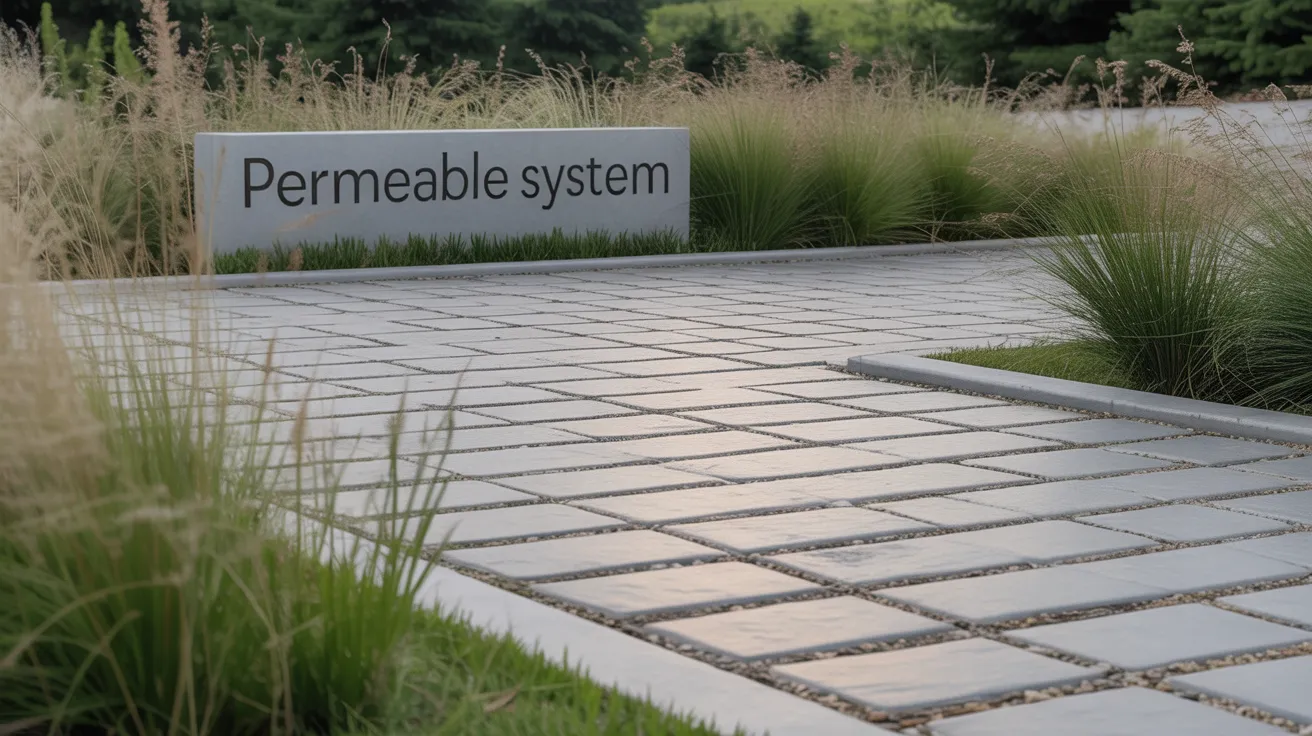
Absolutely. You can install eco-friendly permeable pavers particularly designed to meet stormwater credits. These systems employ specially graded aggregate beds, large-void joints, and geotextiles to facilitate infiltration, minimize runoff, and meet BMP criteria. You'll choose pervious concrete pavers, pervious asphalt, or permeable concrete pavers based on ground absorption rates, subgrade CBR, and water management objectives. Incorporate maintenance plans (vacuum sweeping), hydrologic calculations, and manufacturer specs to document compliance for credit approval.
Final Thoughts
You're not merely picking pavers-you're creating a hardscape built to last. From proper base preparation to joint securing and water management grades, all components integrate like clockwork. You'll receive non-slip textures for pool areas, heavy-duty driveways, and water-resistant patio surfaces. We'll select the right stone, sealants, and care schedule, then secure upfront pricing and timeline. Ready to transform soil into structure? Let's design your vision and construct it to endure North Texas conditions.